Walking for Weight Loss: How Far and How Often
Educational information only — not medical advice, and not a substitute for a licensed clinician who knows your history. Always consult your healthcare provider before changing your diet, supplements, exercise, or treatment. See our Medical Disclaimer.
The bottom line: Walking is a useful, accessible form of aerobic activity that can support weight management, but its effects are modest on their own. Most fat loss comes from an overall calorie deficit driven by diet, total physical activity, and sleep. There is no exact step count or pace that guarantees results; consistency matters more than precision, and individual results vary.

Advanced fitness tracker with heart rate, sleep tracking, and GPS.
Check Price on AmazonHave you ever wondered how your daily walk fits into a healthy routine? Walking is an accessible form of aerobic activity that may support weight management as part of an overall plan that includes balanced nutrition, total daily activity, and adequate sleep. By calibrating the number of steps and pacing your walks effectively, you not only optimize calorie burning but also harness natural energy. This article unpacks evidence-based guidelines to help you identify the precise distance and frequency needed for fat loss, turning every step into a carefully measured stride towards a healthier, more resilient you.
Walking for Weight Loss: How Far and How Often Rocks
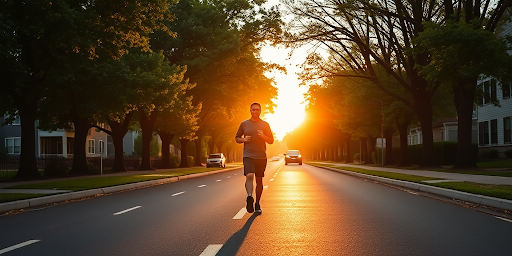
How often should you walk? There is no exact prescription that guarantees results. General U.S. health guidance suggests at least 150 minutes per week of moderate aerobic activity, such as brisk walking. Regular aerobic activity may support weight management when combined with a balanced diet, though individual results vary.
Increasing your walking frequency creates consistent metabolic stimulation. Research supports that brief bouts of walking, distributed throughout the day, further help manage appetite and maintain energy levels. The benefits compound when small sessions are added to your routine, enhancing overall calorie burn while preventing common pitfalls related to isolated cardio sessions.
- Walk for 25 minutes at a brisk pace daily.
- Add steps in amounts that feel sustainable for you; there is no specific number that maximizes results.
- Incorporate short 5- to 10-minute walks during breaks to further increase your total step count.
- Maintain a consistent schedule, spreading walking sessions across the week, to help make activity a sustainable habit.
- Monitor your progress with a wearable device to adjust duration and intensity based on your evolving fitness levels.
By adhering to these guidelines, you establish a robust walking routine that integrates smoothly with your overall lifestyle. Consistency in these walking sessions is key to long-term success in fat reduction and sustaining a healthy metabolism.
Customizing Your Walking Regimen: From Beginner to Advanced

Question: What is the recommended daily step goal for an inactive individual?
Answer: 8,000 steps.
When you ask, “What is the recommended daily step count?” the precise answer is 8,000 steps per day for beginners. This baseline allows you to gradually introduce physical activity into your routine while minimizing injury risk. Inactivity makes achieving higher step counts immediately challenging. A steady start creates a foundation for incremental improvement.
To customize your walking regimen based on your fitness level, consider tiered progression. For beginners, focusing on even short bursts of walking, such as 10-minute post-meal sessions and incidental activities like taking stairs, sets a practical target. Intermediate walkers can increase intensity by integrating brisk intervals into a slightly extended walking duration. Advanced individuals benefit from further step increases and varied walking routes that incorporate uneven terrain for enhanced challenge.
- Start with 8,000 steps daily and aim to progress as your endurance improves.
- Incorporate multiple short sessions, breaking your walking into easily manageable segments throughout the day.
- Use a pedometer or smartphone health app to monitor daily progress and stay accountable.
- For intermediate routines, add 10-15 minute brisk walking segments in planned sessions to enhance cardiovascular challenge.
- Advanced walkers should consider structured walks with varying paces and terrain changes to maximize fat burning and build strength.
Below is a customized table outlining target guidelines based on your fitness level:
| Level | Daily Step Goal | Recommended Duration | Tips |
|---|---|---|---|
| Beginner | 8,000 steps | Spread throughout the day | Use post-meal walks and incidental exercises |
| Intermediate | 9,000 steps | 30-45 minutes per session | Incorporate brisk intervals and planned sessions |
| Advanced | 10,000+ steps | 45-60 minutes per session | Vary terrain and pace; monitor progress meticulously |
Implementing these strategies will help you create a progressive walking plan tailored to your current fitness level, providing necessary guidance and clarity as you evolve your regimen.
Final Words
In the action, you learned how to optimize your walking distance, pace, and routines for effective fat reduction.
You explored step targets, brisk interval tips, and customizable strategies tailored to your fitness level.
Each section offered evidence-based guidelines to support metabolic balance and sustainable energy boosts.
Pairing these walking insights with balanced nutrition enhances your overall weight management efforts.
Keep applying these practices to stay consistent and motivated.
Embrace the strategy of Walking for Weight Loss: How Far and How Often and enjoy the progress ahead.
FAQ
Q: How far should I walk each day to lose weight?
A: Aim for 8,000-10,000 steps daily (approximately 4-5 miles) for optimal weight loss results. Start with 6,000 steps if you’re new to walking and gradually increase your distance over time.
Q: What is the best time of day to walk for weight loss?
A: The best time to walk is whenever you can do it consistently – morning, afternoon, or evening. Consistency is more important than the time of day.
Q: How fast should I walk to maximize fat burning?
A: Maintain a brisk pace where you can talk but not sing (about 3-4 mph). This intensity optimizes fat burning while remaining sustainable for longer distances.
Q: How can beginners start a walking routine?
A: Begin with 15-20 minute walks, three times per week. Gradually increase duration by 5 minutes weekly until reaching 30-45 minutes per session, 5-6 days weekly.
Q: How many calories does walking burn?
A: Calories burned while walking vary widely by body weight, pace, and terrain, so any single figure is only a rough estimate. A fitness tracker can give a personalized approximation, but treat all such numbers as estimates rather than exact values.
Q: How can I make my walks more effective for weight loss?
A: Include interval training by alternating between normal and brisk paces, add inclines to your route, and take shorter, more frequent walks throughout the day.
Q: How long will it take to see weight loss results from walking?
A: Results vary widely from person to person and cannot be predicted, because they depend on diet, total activity, sleep, your starting point, and health conditions. Focus on building a consistent, sustainable routine and consult a licensed clinician for personalized guidance.
Frequently Asked Questions
Does walking burn belly fat specifically?
You cannot target where the body loses fat; spot reduction is a myth. However, regular aerobic activity such as brisk walking is associated with reductions in visceral (abdominal) fat in research, as part of an overall active routine combined with diet. Mayo Clinic notes visceral fat responds to overall diet and exercise, not targeted exercises.
How much walking is generally recommended for health and weight management?
U.S. health guidelines (cited by Mayo Clinic) suggest at least 150 minutes per week of moderate aerobic activity, such as brisk walking, plus strength training twice weekly. This is a general activity target, not a guaranteed weight-loss formula. Talk to your clinician about what is right for you.
Will walking alone make me lose weight?
Usually not by itself. Weight change depends on an overall calorie balance influenced by diet, total daily activity, sleep, and other factors. Walking can contribute to that balance and offers broad health benefits, but pairing it with balanced nutrition matters more than any single number of steps.
Is a brisk pace better than a casual stroll?
A brisk pace where you can talk but not easily sing (often described as moderate intensity) raises your effort and energy expenditure compared with a casual stroll. The best pace is one you can sustain safely and consistently. Build up gradually if you are new to walking.
How many steps per day should I aim for?
There is no single required number. Many people use 8,000 to 10,000 steps as a general activity goal, and observational research links higher daily step counts with better health outcomes, but the ideal target is individual. Increasing gradually from your current baseline is a reasonable approach.
How long before I see results from walking?
This varies widely from person to person and cannot be promised. Factors include diet, overall activity, sleep, starting point, and health conditions. Focus on building a consistent, sustainable routine rather than a fixed timeline. Consult a licensed clinician before starting a new exercise program.
Last updated June 22, 2026. Reviewed against the cited evidence: Wewege et al., aerobic vs. resistance exercise training on visceral fat, Obesity Reviews 2011 (PMID 21951360); Maillard et al., HIIT on abdominal and visceral fat, Sports Medicine 2018 (PMID 29127602); and Mayo Clinic, "Belly fat in men: Why weight loss matters" (2023).
Sources
- MedlinePlus: Walking programs, pacing, and calorie deficits for weight loss
- NIH: Walking for Weight Loss: How Far and How Often
Related Reading
- Cardio vs Strength Training for Belly Fat
- How to Build Lean Muscle Mass
- Strength Training for Older Adults: Benefits
- Effective Fitness Programs for Belly Fat
Recommended Products
Hand-picked to support your health goals
 DEGOL Skipping Rope
Tangle-free speed jump rope for HIIT and cardio sessions.
Check Price on Amazon Amazon Basics Neoprene Dumbbells
Color-coded dumbbells for strength training at home.
Check Price on AmazonAs an Amazon Associate, we earn from qualifying purchases.